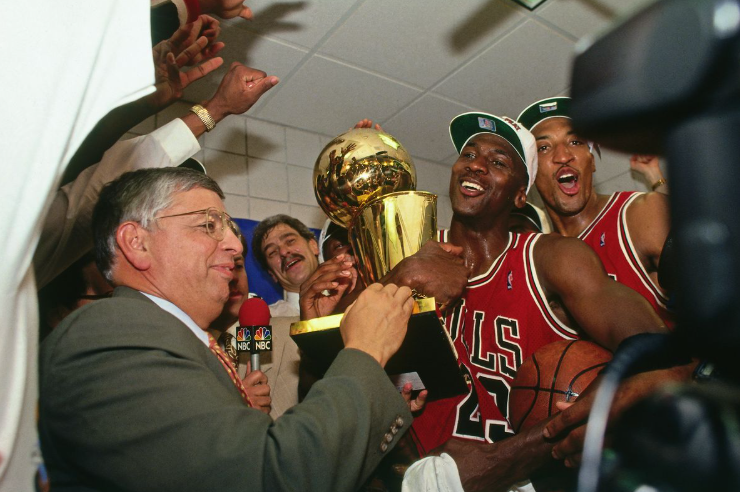
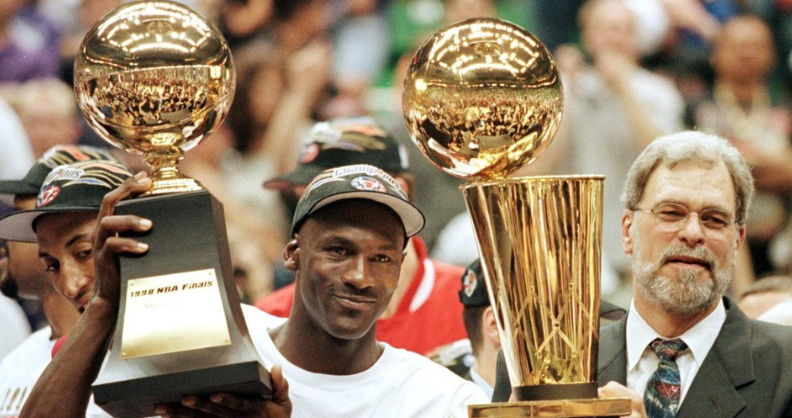
In the history of the NBA, a three-peat is one of the most elusive great achievements, and only a handful of teams have managed to pull it off. Since the Los Angeles Lakers from 2000 to 2002, the NBA has not seen another team that has been able to replicate this feat. However, Michael Jordan led the Chicago Bulls to complete three consecutive titles twice, from 1991 to 1993 and 1996 to 1998, creating a legend in basketball history. Despite this, there were many difficulties behind this achievement, and it is precisely because of these challenges that this achievement is so difficult to replicate.
League Competitive Pressure
During Jordan’s first pursuit of a three-peat, the Bulls faced strong competitive pressure from teams around the league. In the 1992-1993 season, the Bulls faced Charles Barkley’s Phoenix Suns in the finals. The Suns were considered one of the most competitive teams in the league at the time. Barkley is at the peak of his career and is widely regarded as the second best player in the league. The Suns’ offensive firepower is extremely strong and their playing style is full of changes, which brings unprecedented challenges to the Bulls’ defense. Especially when the Suns’ offensive tactics are highly diversified, the Bulls’ defensive system faces great pressure. In order to continue to maintain dominance in this situation, the Bulls not only need a very high level of skills and tactics, but also have super teamwork ability.
At the same time, as the defending champions, the Bulls will become the focus of their opponents’ research in every game, and even the center of their strategy. The opposing team will limit Jordan’s performance in many ways, especially through double-teaming tactics, trying to prevent Jordan from playing his scoring ability. In the face of this targeted defense, other Bulls players must stand up to share more scoring tasks, and this strategic pressure often makes every game of the Bulls extremely difficult. As opponents deepen their research on the Bulls’ tactics, the Bulls have to constantly innovate their playing style and adjust their strategies to maintain their competitiveness.
Schedule and physical fitness
The NBA season itself is a great test of players’ physical fitness and endurance. The regular season lasts 82 games, and the playoffs are even more intensive and stressful. In the process of pursuing three consecutive championships, Jordan and the Bulls had to go through continuous high-intensity games, which is a huge physical consumption for any player. Jordan’s playing time in the game often exceeded 35 minutes. He not only had to take on the main scoring task on the offensive end, but also had to perform well on the defensive end. This high-intensity game rhythm caused the players’ physical fitness to gradually decline, and the risk of injury continued to increase.
In addition to the intensive schedule of the season, the Bulls also had to deal with frequent away trips. Long-term travel can cause jet lag and accumulation of physical fatigue, and the players’ recovery time is extremely limited. What’s worse, as the playoffs entered the climax stage, the intensity and pressure of the game continued to increase, and any decline in physical fitness would affect the players’ performance, especially the impact on technical movements and reaction speed. Despite this, the Bulls were still able to overcome these difficulties through scientific physical training and tactical adjustments, and finally successfully completed two three-peat championships.
Lineup stability
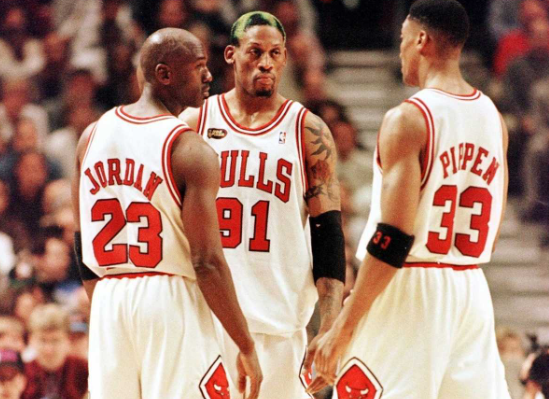
Although the Bulls retained many core players such as Jordan, Pippen and Rodman during their two three-peat, the chemistry within the team was not static. Especially during Jordan’s first three-peat, some subtle changes occurred inside and outside the team, and the relationship between the players began to fluctuate. As the core of the team, Jordan often faced situations where other players wanted more responsibility and attention, which made the team atmosphere complicated and tense. In order to maintain the internal harmony and cohesion of the team, the management and coaching staff of the Bulls constantly made adjustments to ensure that the team’s chemistry would not be destroyed.
As the season progressed, the stability of the team’s lineup became one of the challenges faced by the Bulls. Player injuries and contract issues often required adjustments to the Bulls’ lineup. In this case, the Bulls not only needed to ensure that the core lineup was not affected, but also needed to adjust the positions of role players and find suitable players to fill the vacancies caused by injuries and other problems. At the same time, new players needed to quickly integrate into the team to ensure that they could form a good tacit cooperation with the core players.
Tactical evolution
The victory or defeat of a basketball game depends not only on the individual ability of the players, but also on the evolution and innovation of tactics. As the Bulls won consecutive championships, their triangle offense tactics have been familiar to their opponents and studied thoroughly. In order to maintain their competitive advantage, the Bulls need to continuously improve and innovate the triangle offense and increase the complexity of the tactics to break the opponent’s defensive blockade. In addition, the Bulls’ defensive strategy also needs to be constantly adjusted to cope with the offensive styles of different opponents. In every game, the coaching staff needs to flexibly adjust the tactics according to the characteristics of the opponent, which puts higher demands on the players’ execution ability and tactical understanding.
Michael Jordan’s two three-peat championships are not only a brilliant embodiment of personal skills, but also a perfect combination of teamwork, tactical innovation and tenacity. In the face of increasingly fierce competition in the league and a long and harsh schedule, the Bulls relied on their strong overall strength and Jordan’s personal leadership to overcome countless difficulties and finally achieved this almost unrepeatable achievement. This great feat not only made the Bulls go down in history, but also set an almost unsurpassable benchmark for subsequent teams.