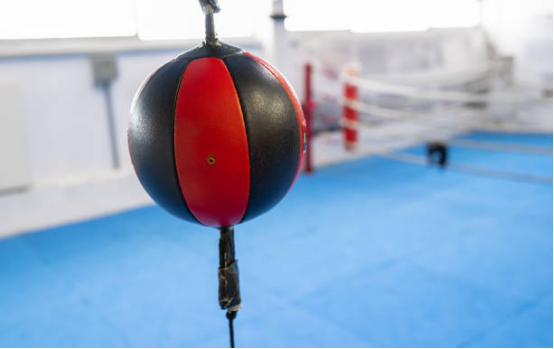
What is a Speedball and Why is it Indispensable for Combat Athletes?
The speedball, often seen suspended in boxing gyms, is far more than just a piece of equipment; it’s a dynamic training partner designed to hone some of the most critical attributes for any combat athlete. Its constant, unpredictable motion demands intense focus and rapid adjustments, making it an unparalleled tool for developing lightning-fast reflexes and precision striking. Understanding its fundamental purpose and historical significance provides context for its enduring relevance in modern training regimens.
The Historical Context and Evolution of Speedball Training
The concept of using a small, rapidly moving target for training hand-eye coordination dates back centuries, with various forms of striking targets used across different martial arts. The modern speedball, as we know it, gained prominence with the rise of professional boxing in the late 19th and early 20th centuries. Boxers quickly recognized its unique ability to simulate the unpredictable movement of an opponent’s head, forcing them to react and strike with precision in a confined space. Over time, its design has been refined, from simple leather bags to sophisticated synthetic materials, yet its core purpose remains unchanged: to refine the intricate dance between vision, thought, and physical execution.
Core Benefits Beyond Eye-Hand Coordination
While eye-hand coordination is the most celebrated benefit of speedball training, its advantages extend much further. Regular practice significantly improves timing, allowing athletes to anticipate and react to moving targets with greater accuracy. It builds rhythm, teaching the body to maintain a consistent, flowing motion crucial for sustained combat. Furthermore, the repetitive, precise movements enhance muscular endurance in the shoulders and arms, while the mental focus required sharpens concentration and decision-making under pressure. It’s a comprehensive neurological and physical workout that translates directly into enhanced performance in the ring or cage.

Setting Up Your Speedball: The Foundation for Effective Training
Proper setup is paramount for effective speedball training. An incorrectly mounted or inflated speedball can hinder progress, promote bad habits, and even lead to injury. This section details how to select the right equipment and configure it to maximize your training potential, ensuring a consistent and responsive rebound that challenges and refines your skills.
Choosing the Right Speedball and Platform
Speedballs come in various sizes and materials, each offering a slightly different training experience. Smaller bags rebound faster, demanding quicker reflexes, while larger ones move slower, allowing for a focus on power and rhythm. Beginners often benefit from a medium-sized bag (around 8-10 inches) to establish fundamental rhythm. The platform itself must be sturdy and securely mounted to a solid wall or ceiling beam. A thick, stable platform (at least 1.5 inches thick) made of wood or composite material will minimize vibration and ensure consistent rebound, which is crucial for developing a smooth rhythm.
Optimal Height and Inflation for Different Skill Levels
The ideal height for your speedball is subjective but generally, the bottom of the bag should be roughly level with your chin or nose when you are standing in your fighting stance. This position encourages striking at head height, mimicking real combat scenarios. For beginners, slightly lower can be acceptable to build confidence. Inflation is also critical; an over-inflated bag will be too rigid and rebound too quickly, while an under-inflated bag will be sluggish. Aim for a firmness that allows for a quick, crisp rebound without being excessively hard. Experiment with slight adjustments to find the sweet spot that offers the best balance of challenge and responsiveness for your current skill level.
Technical Checklist: Speedball Setup Essentials
- Securely mounted platform to a solid structure.
- Platform height adjusted so the bottom of the bag is at chin/nose level.
- Speedball size appropriate for skill level (medium for beginners).
- Bag properly inflated for a crisp, responsive rebound.
- Swivel mechanism clean and lubricated for smooth rotation.
- Clear, unobstructed space around the platform for movement.

Mastering Speedball Technique: From Basics to Advanced Rhythm
Developing proficiency with the speedball requires patience, precision, and a systematic approach. It’s not just about hitting the bag; it’s about understanding its rebound patterns, developing a consistent rhythm, and integrating footwork and defensive movements. This section breaks down the core techniques, guiding you from foundational strikes to complex combinations.
Fundamental Stance and Hand Position
Begin by adopting a balanced fighting stance, feet shoulder-width apart, non-dominant foot slightly forward, and knees slightly bent. Keep your hands up, chin tucked, and eyes fixed on the bag. The initial strike should come from a relaxed hand, typically a jab or straight punch, making contact with the flat part of your knuckles. After striking, retract your hand quickly, allowing the bag to rebound. The key is to maintain a light touch and let the bag’s natural momentum do most of the work, rather than trying to overpower it.
Developing Your Basic Punching Rhythm (The “Two-Hit” Cycle)
The most fundamental rhythm involves a two-hit cycle: strike, rebound, strike, rebound. For example, a left jab hits the bag, the bag rebounds to the left, then you hit it again with your left hand as it comes back. Alternatively, a more common rhythm is a three-hit cycle with two hands: left, right, left, then the bag cycles back. The critical element is to listen to the sound of the bag and observe its movement. The goal is to strike the bag precisely as it returns from its rebound, creating a continuous, flowing motion. Start slow, focusing on consistency and timing, gradually increasing your speed as your rhythm becomes more natural. Visualize the bag returning in a figure-eight pattern.
Advanced Drills: Combinations, Footwork, and Defensive Integration
Once you’ve mastered a basic, consistent rhythm, you can begin to introduce more complex elements. Practice varying your punches (jabs, crosses, hooks) while maintaining rhythm. Incorporate footwork by moving around the bag, striking from different angles, and practicing pivots. Integrate defensive movements like slips and rolls, striking the bag after evading an imaginary punch. For example, slip left, then hit with a right cross. The speedball can also be used to practice specific combinations, such as a jab-cross-hook, ensuring each punch lands with precision and maintains the bag’s momentum. This deepens the neurological connection between offense and defense, enhancing overall combat fluidity.
Common Pitfalls and Pro Tips for Speedball Mastery
Even seasoned athletes can fall into common traps when training with the speedball. Identifying and correcting these issues is crucial for continuous improvement. Furthermore, integrating expert advice can significantly accelerate your journey to speedball mastery, transforming it from a mere exercise into a powerful skill-building tool.
Troubleshooting Common Mistakes: Overhitting, Timing, and Stance Issues
One of the most frequent mistakes is overhitting the bag, which disrupts its rhythm and forces you to chase it. Instead, aim for a controlled, precise tap that allows the bag to rebound naturally. Another common issue is poor timing; striking too early or too late will break the flow. Focus on listening to the bag’s distinct “slap” sound and hitting it just as it returns. Stance issues, such as leaning too far forward or having an unbalanced base, can limit mobility and power. Maintain a light, athletic stance, ready to move and adjust. Regularly reviewing your technique, perhaps by recording yourself, can help identify and correct these subtle errors.
Expert Advice: Integrating Speedball into Your Overall Training Regimen
Don’t view speedball training in isolation. Instead, integrate it strategically into your broader combat sports regimen. Use it as a warm-up to sharpen reflexes before sparring, or as a cool-down to focus on precision and rhythm after heavy bag work. Dedicate specific sessions to speedball drills, focusing on different aspects like speed, endurance, or combination work. Consistency is key; even short, focused sessions several times a week are more beneficial than sporadic, intense workouts. Remember that mental focus is as important as physical execution; visualize an opponent and maintain intense concentration throughout your session.
Comparison: Speedball vs. Other Punching Bags
| Feature | Speedball | Heavy Bag | Double-End Bag |
|---|---|---|---|
| Primary Focus | Eye-hand coordination, timing, rhythm, precision, endurance | Power, strength, conditioning, combination punching | Timing, distance, head movement, counter-punching |
| Movement Type | Fast, circular, predictable rebound pattern | Stationary, absorbs heavy impact, swings after strikes | Erratic, unpredictable, rebounds from two anchor points |
| Key Benefit | Refines quick reactions and continuous flow | Develops knockout power and physical conditioning | Improves defensive skills and elusive target tracking |
| Best For | Sharpening reflexes, maintaining rhythm, light striking | Building power, improving stamina, full-body workout | Practicing slips, rolls, counter-attacks, footwork |
| Training Level | All levels, crucial for advanced precision | All levels, fundamental for power development | Intermediate to advanced, requires good timing |
Frequently Asked Questions (FAQ)
- How often should I practice with the speedball?
- For optimal improvement, aim for 3-5 sessions per week, with each session lasting 10-20 minutes. Consistency is more important than prolonged, infrequent sessions. Short, focused drills yield better results in developing muscle memory and rhythm.
- What if I can’t maintain a consistent rhythm with the speedball?
- This is a very common challenge. Start by slowing down significantly. Focus on hitting the bag with a light tap and observing its rebound pattern. Listen for the distinct “slap, slap, slap” sound. Don’t try to hit it hard; just guide it. Practice single-hand drills first, then gradually introduce the other hand. Patience and repetition are key.
- Should I use boxing gloves or bare hands for speedball training?
- It’s generally recommended to use light bag gloves or hand wraps for speedball training. While the impact is lighter than a heavy bag, prolonged bare-hand striking can cause skin irritation or minor knuckle damage. Gloves also help simulate the feel of combat, though some prefer bare hands for maximum tactile feedback.
- Can speedball training help with my boxing power?
- Speedball training primarily focuses on speed, timing, precision, and endurance, not raw power. While it can improve the snap and quickness of your punches, it won’t directly build knockout power like heavy bag work or strength training. It’s a supplementary tool that enhances the *delivery* of power, not the generation of it.
- What’s the difference between a speedball and a double-end bag?
- A speedball is anchored only at the top and rebounds in a circular, relatively predictable pattern, primarily training eye-hand coordination and rhythm. A double-end bag is anchored at both the top and bottom, creating a more erratic, unpredictable movement that is excellent for practicing timing, distance management, and head movement for defensive maneuvers.