Throughout NBA history, the “clutch shot” is not just a technical skill but also a legacy. Michael Jordan, with countless buzzer-beaters and cold-blooded post-up mid-range jumpers, defined the meaning of “Mr. Clutch.” After his retirement, this title, a symbol of courage and control, became a prestigious title coveted by subsequent generations of players. James, Kobe Bryant, the flamboyant Irving , and the younger generation of players like Durant, Curry, and Leonard are all answering, in their own ways, a defining question of their time: who will be the master of the clutch shot after Jordan?
Definition and statistical standards of key balls
In basketball, a clutch shot typically refers to a decisive shot in the final moments of a game. From a statistical perspective, the NBA officially defines a clutch shot as the final five minutes of a game when the score is within five points. However, a true clutch shot is much more than just a number.
According to Basketball-Reference, clutch performance should be evaluated based on factors such as field goal percentage, scoring efficiency, assists, and turnover control. While these statistics provide objective metrics, there’s a subtle distinction between a game-winner and a clutch shot: the former is defined as a go-ahead shot in the final 24 seconds of a game, while the latter encompasses a broader range, reflecting a player’s overall control in crucial moments.
The Kobe Era: The Black Mamba’s Game-Winning Art
If Jordan pioneered the belief in clutch plays, then Kobe Bryant embodied it.
He completed 26 career buzzer-beaters (seven in the playoffs), shooting 43.2% from the field and 34.5% from three-point range in the final five minutes within five points. These numbers justify his reputation as a “cold-blooded killer.”
Kobe’s most iconic moments include:
2004 vs. Trail Blazers : three-pointer to tie the game in regulation and buzzer-beater in overtime;
2006 vs. the Suns : buzzer-beaters in regulation and overtime;
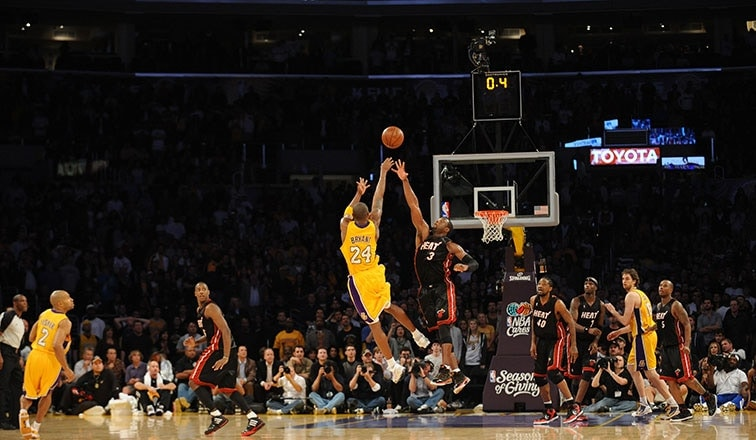
2009 vs. Heat : Facing Wade’s drifting three-pointer to end the game.
Kobe’s philosophy of clutch shots stems from a creed: “I am willing to take the risk of failure.” It is this will that makes him the most trustworthy finisher in the hearts of his teammates and coaches.
James’s story: The evolution of a versatile player’s clutch game
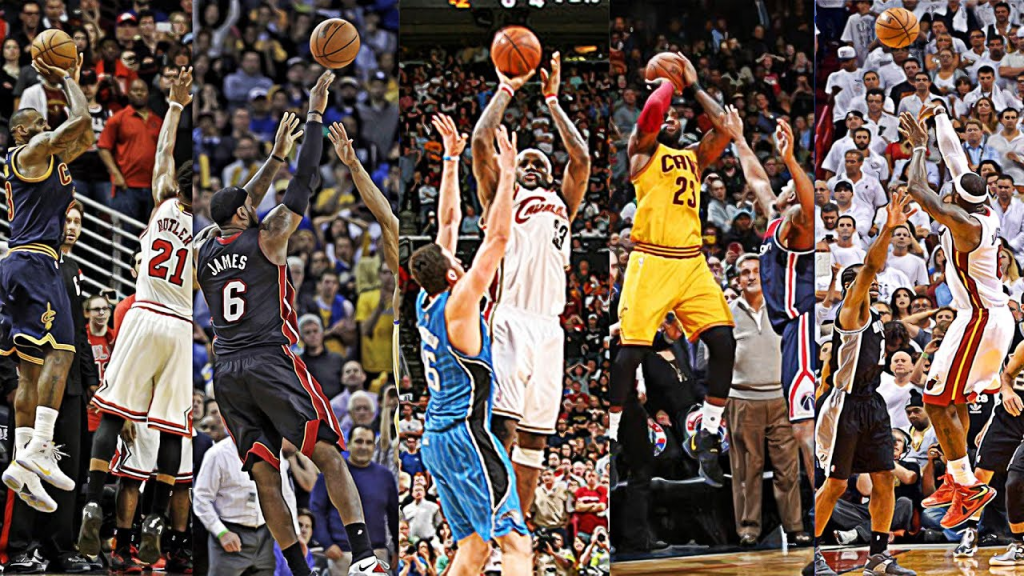
LeBron James’ clutch-play career is one of the most controversial and misunderstood in the NBA.
According to official NBA data, James’s field goal percentage in clutch playoff situations is a staggering 48.7%, one of the highest among players who have attempted at least 100 clutch shots. His clutch performance is reflected not only in his scoring but also in his all-around impact through decision-making, rebounding, and assists.
Unlike Kobe, James prioritizes making the right choice over the heroic shot in crucial moments.
He once said, “I read the defense and make the best decision.” In Game 6 of the 2013 Finals, James hit a clutch three-pointer in the final moments and grabbed the offensive rebound before Ray Allen’s life-saving shot—a perfect fusion of rationality and strength.
The Irving phenomenon: The key gene for a big heart
Kyrie Irving has found his own balance between the “lone hero” tradition shaped by Jordan and Kobe and the rational decision-making of James.
With his artistic ball-handling rhythm and creativity, he has given “clutch shots” a new aesthetic definition.
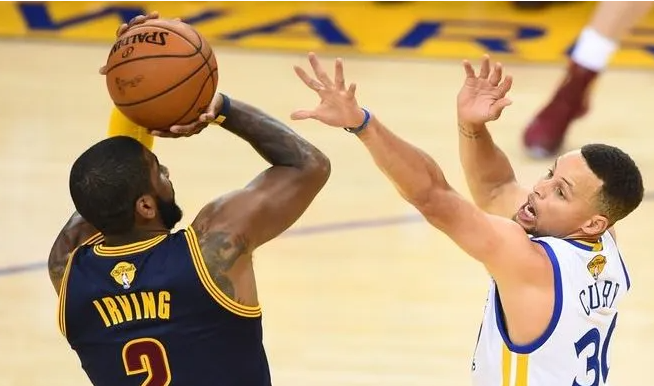
In Game 7 of the 2016 Finals, Irving’s three-pointer over Curry became one of the most iconic clutch moments in the modern NBA. That shot not only clinched Cleveland’s first championship, but also cemented Irving’s status as a clutch player.
Irving’s clutch play is built on three core elements:
Historic ball-handling skills: able to create space in any defense;
Balanced finishing ability with both hands: Can complete difficult shots with both hands;
Ultimate feel and arc control: Maintain precision even when off-balance.
According to statistics, Irving’s shooting percentage in the last minute of the game when the game is tied or behind is as high as 46.3%, ranking among the top among active players.
New Era Players: The Challenges of Durant, Curry, and Leonard
As the times change, the form of key balls is also changing.
Kevin Durant, with his unstoppable shooting touch and height advantage, had a true shooting percentage of 58.2% in the final five minutes when the score difference was within 5 points, making him the “most stable finisher”;
Stephen Curry overturned the concept of clutch shots with his “three-point revolution”—he often used consecutive long-range shots to kill suspense in the middle of the game;
Kawhi Leonard ‘s 2019 Game 7 buzzer-beater is the only Game 7-ending shot in NBA history—calm, precise, and deadly.
Data comparison: Who is the real key man?
| players | Shooting percentage | Three-point shooting percentage | Points per game | Assists |
| Kobe Bryant | 43.2% | 34.5% | 4.1 | 0.7 |
| James | 48.7% | 32.6% | 5.2 | 1.1 |
| Irving | 46.3% | 38.1% | 3.8 | 0.9 |
| Durant | 47.8% | 36.4% | 4.3 | 0.8 |
From a data perspective, James has a slight advantage in efficiency and comprehensiveness; Irving’s three-point stability and instantaneous explosiveness are outstanding; Kobe’s scoring volume still represents “faith in critical moments.”
Conclusion: The evolution and inheritance of key ball culture
After Jordan retired, the NBA’s clutch ball culture went through three iterations:
“I have to shoot” during the Kobe era;
“I made the right choice” during the James era;
“I use technology to create miracles” in the Irving era.
Today, the new generation of players like Durant, Curry, Leonard, Dončić, and Tatum are carrying on this spirit. They are no longer bound by a single definition, but instead demonstrate multi-dimensional basketball wisdom in crucial moments.
The clutch shot isn’t just a game-ending shot; it symbolizes determination, courage, and conviction. Jordan pioneered this era, Kobe and James continued it, and Irving has revitalized it as an art form. Perhaps the new “master of the clutch shot” will emerge in the final moments of the next game.