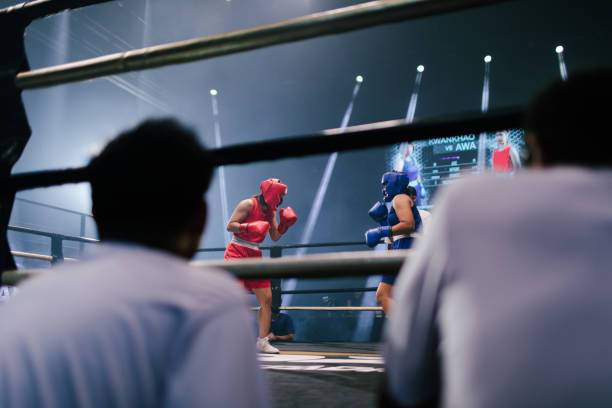
Professional boxing is one of the most physically demanding sports in the world, requiring a unique blend of aerobic endurance, anaerobic power, and cognitive agility. To train like a professional, one must look beyond simple sparring. A truly effective regimen integrates scientific conditioning, specialized strength training, and meticulous technical drills. This pillar page synthesizes elite training methodologies to provide a comprehensive roadmap for athletes looking to elevate their combat performance.
The Foundation of Boxing: Conditioning and Warm-Up Protocols
The success of a boxing session is often determined before the first punch is even thrown. A professional warm-up serves two purposes: injury prevention and physiological priming. By increasing blood flow to the joints and activating the central nervous system, boxers ensure their muscles are ready for high-velocity movements.
The Art of Jumping Rope
Jumping rope is the quintessential boxing exercise, but its benefits go far beyond basic cardio. For a boxer, the rope is a tool for developing rhythm, coordination, and foot speed. Professional routines often include varying intensities and styles to mimic the rounds of a fight.
- The Boxer Skip: Shifting weight slightly from one foot to the other to conserve energy while maintaining a high pace.
- Double-Unders: Used to increase explosive power in the calves and improve fast-twitch muscle fiber recruitment.
- Crossovers: Enhances hand-eye coordination and shoulder endurance, critical for maintaining a high guard during later rounds.
Dynamic Stretching and Mobility
Unlike static stretching, dynamic movements prepare the body for the specific ranges of motion required in boxing. Exercises such as arm circles, hip gates, and shadowboxing at 20% intensity help lubricate the rotator cuffs and hip sockets, which are high-stress areas for pugilists.

Building Explosive Power and Full-Body Strength
In boxing, power is not merely a product of muscle mass; it is a product of force transfer through the kinetic chain. The force begins in the legs, travels through the core, and is delivered through the fist. Therefore, strength training for boxers must focus on explosive movements rather than traditional bodybuilding isolation.
The Kinetic Chain and Punching Mechanics
To maximize punching velocity, training must emphasize “explosive strength.” This involves moving weights or resistance as quickly as possible. Exercises like the medicine ball slam or rotational medicine ball throws are essential because they mimic the exact rotational mechanics of a hook or a cross.
Boxing-Specific Strength Exercises
| Exercise | Target Area | Boxing Benefit |
|---|---|---|
| Medicine Ball Throws | Core and Shoulders | Increases rotational speed and punch “snap.” |
| Plyometric Push-ups | Chest and Triceps | Improves hand speed and explosive pushing power. |
| Trap Bar Deadlift | Posterior Chain | Builds the foundational leg strength needed for stability. |
| Landmine Press | Shoulders and Core | Develops unilateral power and shoulder health. |

Mastering Footwork: From Static Balance to Dynamic Agility
Footwork is the bridge between offense and defense. A boxer with superior footwork can create angles for attack while remaining elusive. Training moves from static positions where balance is perfected to dynamic movements where the athlete learns to maintain their center of gravity while under pressure.
Transitioning from Static to Dynamic
Initial training involves the “Boxing Stance Hold,” focusing on weight distribution—usually 50/50 or 60/40 toward the back leg. Once the stance is stable, athletes progress to shuffling and pivoting. Pivoting is the most critical dynamic skill, allowing a boxer to change the line of attack without exposing their chin.
Drills for Agility
Ladder drills and cone drills are used to improve “lightness” on the feet. The goal is to minimize the time the feet spend on the ground. Professional boxers practice moving in “bursts,” simulating the need to close the distance rapidly or escape a corner.

Advanced Core Strength for Maximum Force Transfer
Many athletes mistake core training for just doing crunches. For a boxer, the core is a stabilizer and a transmitter. It must be strong enough to absorb impact from body shots and rigid enough to transfer power from the floor to the hands without “energy leaks.”
Overlooked Core Exercises
While planks are standard, professional boxers utilize more complex movements to target the deep stabilizers and obliques:
- The Dead Bug: Teaches pelvic stability and limb independence, crucial for maintaining balance while throwing multi-punch combinations.
- Russian Twists with Resistance: Specifically targets the internal and external obliques, which are the primary drivers of rotational punching power.
- Hanging Leg Raises: Strengthens the lower abdominals and hip flexors, providing the “crunch” power needed for infighting.

Maximizing Training Efficiency with Boxing Equipment
The choice of equipment dictates the training outcome. A common mistake is treating all bags the same. Professional training separates equipment into “Power/Stamina” tools and “Accuracy/Timing” tools.
Heavy Bag vs. Target Shooting (Mitts)
The Heavy Bag is designed for developing raw power and aerobic conditioning. It provides resistance, allowing the boxer to “sit” on their punches. In contrast, Target Shooting or Focus Mitts are for technical precision. Mitt work allows a coach to simulate a moving opponent, forcing the boxer to adjust their distance and timing in real-time.
The Speed Bag and Double-End Bag
The speed bag builds shoulder endurance and hand-eye rhythm. The double-end bag, however, is perhaps the most difficult to master. Because it rebounds unpredictably, it forces the boxer to stay alert, move their head, and time their counters perfectly, bridging the gap between bag work and sparring.

Cognitive Drills to Enhance Reaction and Reflexes
Boxing is often called “physical chess.” At the professional level, the speed of the hand is often secondary to the speed of the eye. Reaction training focuses on reducing the “latency” between seeing an opening and executing a movement.
Proven Methods for Reflex Improvement
Boxers use several methods to sharpen their neurological response times:
- Tennis Ball Drills: Bouncing a tennis ball while moving or having a partner throw balls from various angles to improve tracking and catching reflexes.
- Shadowboxing with Cues: A coach provides auditory or visual signals (e.g., shouting “One!” for a jab) to force the athlete to react instantly rather than following a pre-set pattern.
- Light Sparring (Technical Sparring): This allows athletes to practice seeing punches coming in a controlled environment without the fear of heavy impact, helping them desensitize their blink reflex.
Frequently Asked Questions (FAQ)
- Q1: How often should I perform explosive strength training?
- For most boxers, explosive strength training should be limited to 2-3 sessions per week. This allows the central nervous system to recover, as high-velocity movements are taxing on the neurological system. Always prioritize quality of movement over total weight.
- Q2: Is jumping rope better than running for boxing conditioning?
- Both have their place. Running (especially interval sprints) builds the aerobic base and leg endurance. Jumping rope, however, is superior for developing the specific “bounce” and coordination required in the ring. A professional routine usually combines both.
- Q3: Why is core strength so important for punching?
- The core acts as a bridge. If your core is weak, the energy generated by your legs will dissipate before it reaches your fist. A strong core ensures that 100% of the force generated is transferred into the target.
- Q4: How can I improve my reaction time at home?
- You can use a reaction ball (a multi-sided ball that bounces unpredictably) or simple coin-drop drills. Even shadowboxing in front of a mirror and reacting to your own movements can help sharpen your visual processing speed.
- Q5: What is the best equipment for a beginner?
- A beginner should start with a heavy bag to develop basic punch mechanics and a jump rope for conditioning. Once basic form is established, moving to focus mitts with a partner is essential for learning distance and timing.