
In the world of basketball, few have associated themselves with the word “great” as so firmly as Michael Jordan. Just recently, he once again became the focus of global sports media—not because of business moves, but because of his public critique of the current NBA “load management” system. Almost overnight, this six-time champion legend reignited the discussion about “professionalism” with a single sentence.
I. Jordan: An Echo of the Era’s Criticism of “Load Management”
In an interview on NBC’s “MJ: Insights to Excellence,” Jordan made a startling statement: “There should never be any load management.” He recalled playing all 82 games during his playing career, emphasizing that it was a matter of respect for the fans and for basketball itself—“You play 2.5 to 3 hours a day, that’s your job.”
Jordan’s views quickly sparked a frenzy on social media. Supporters like Paul Pierce argued that he “reminded the core of player professionalism,” while opponents pointed out that the modern league’s schedule density and medical management system are vastly different from his era. Some even commented that Jordan’s remarks were “self-serving,” but this did nothing to diminish fans’ nostalgia for the “old-school fighting spirit.”
According to BET.com, Jordan emphasized in an internal meeting: “Fans are the true lifeblood of the league.” This was not just criticism, but more like a declaration—what he was defending was not just physical endurance, but the purity of the basketball spirit.
II. Harden: Responding to a Different Definition of “Greatness” Through Transformation
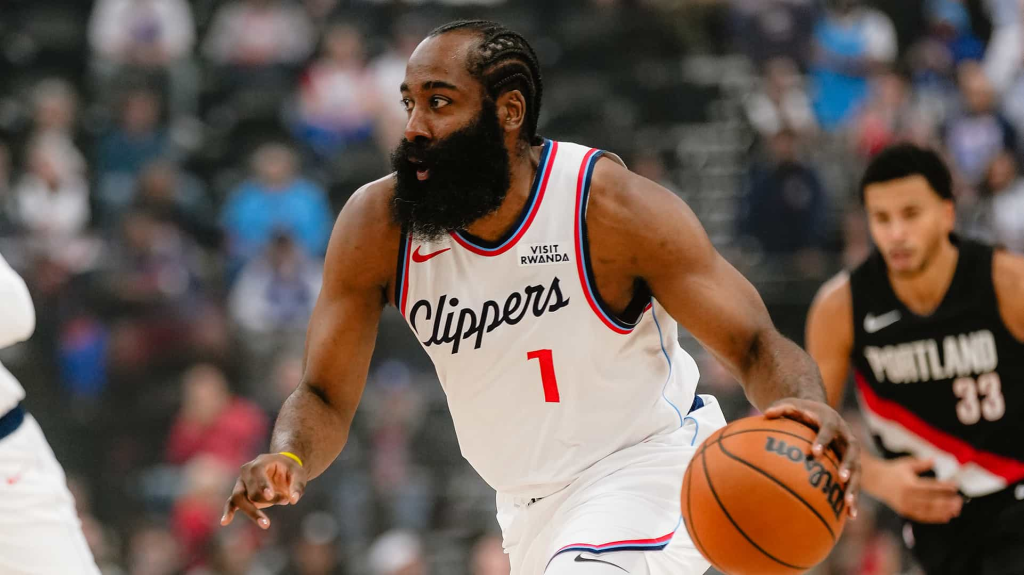
Meanwhile, James Harden is interpreting “greatness” in his own way. In the 2024-25 season, he maintained his efficient performance—averaging 22.8 points, 8.7 assists, and 5.8 rebounds per game (StatMuse data), and recording multiple double-doubles. Although his scoring is no longer as dazzling as in his peak years, his role in the team system is more comprehensive.
After signing a new two-year, $81.5 million contract, Harden has transformed from a former “scoring champion” into a “playmaking leader.” As commentator Paul Pierce put it, “He is redefining the way a mature player plays.”
This role change is not only a technical adjustment but also a shift in attitude—from individual statistics to team orientation, from the spotlight to a behind-the-scenes facilitator.
Off the court, Harden is also embarking on a new chapter – he and his girlfriend Paije Speights hosted a baby shower themed “New Chapter in Life,” symbolizing a turning point in his life and mindset. This star, once labeled a “flashy scorer,” now resembles a composed professional leader.
III. A Contemporary Comparison of Two Professional Spirits
Jordan and Harden represent contrasting eras: one embodies the “Iron Man Era” of fierce competition, the other interprets the “Data Era” that emphasizes both strategy and balance.
Jordan believed in “responsibility first,” and his basketball philosophy was built on patience and physicality; Harden, on the other hand, embodies “intelligence-driven” basketball, emphasizing rhythm, passing, and team structure.
The point of convergence between them is not the number of championships or data records, but their shared commitment to “professionalism”—the former through consistent attendance, and the latter through continuous contributions.
IV. Media and Fans: From Debate to Resonance
On social media, hashtags like “Jordan load management,” “Harden leadership,” and “old school vs. modern era” have become trending.
Traditional fans agree with Jordan’s philosophy that “players should be responsible to fans,” while the younger generation understands the rationale behind Harden’s approach of “scientific management and long-term health.”
This divergence actually reflects the inevitable development of basketball: when physical limits and career lifespan become management issues, the balance between “passion” and “rationality” also becomes a new definition of the profession.
V. Conclusion: The Greatness of Diversity
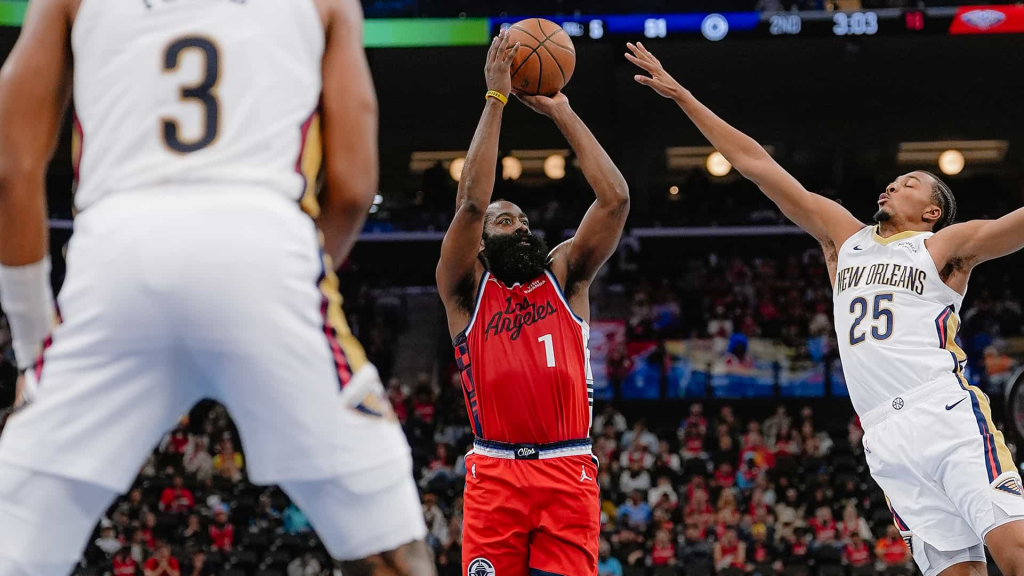
Michael Jordan rekindled the emotional foundation of basketball with his statement, “It is a player’s responsibility to play.” James Harden, on the other hand, showed us with his mature court control and assists that greatness comes in many forms.
One represents an unyielding fighting spirit, the other embodies the wisdom of evolution.
Their convergence is not opposition, but rather different expressions of “professionalism”.
When Jordan looks back, he reminds us that the essence of basketball is responsibility; while Harden, in his current state, proves that greatness can also be about continuity, transformation, and maturity.
In this league that is both nostalgic and forward-looking, perhaps the true soul of basketball lies somewhere in between.